

Contact Us
Department of Ophthalmology
7:00 am - 8:00 pm
9:30 am - 6:00 pm
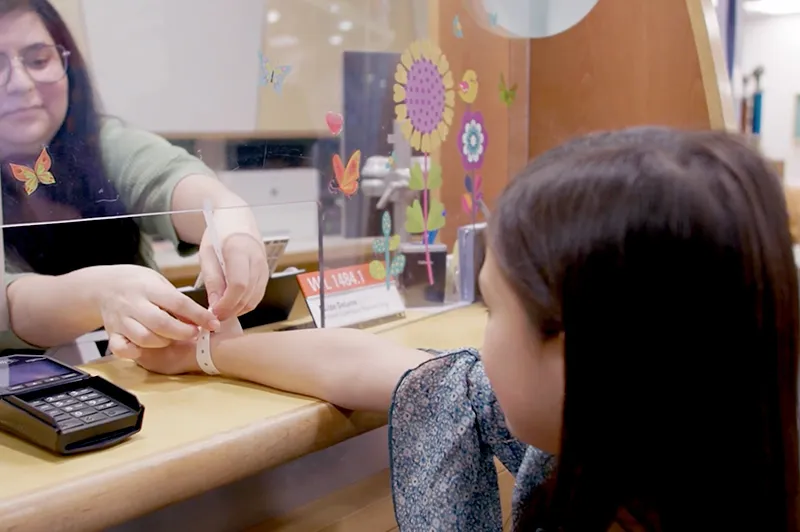
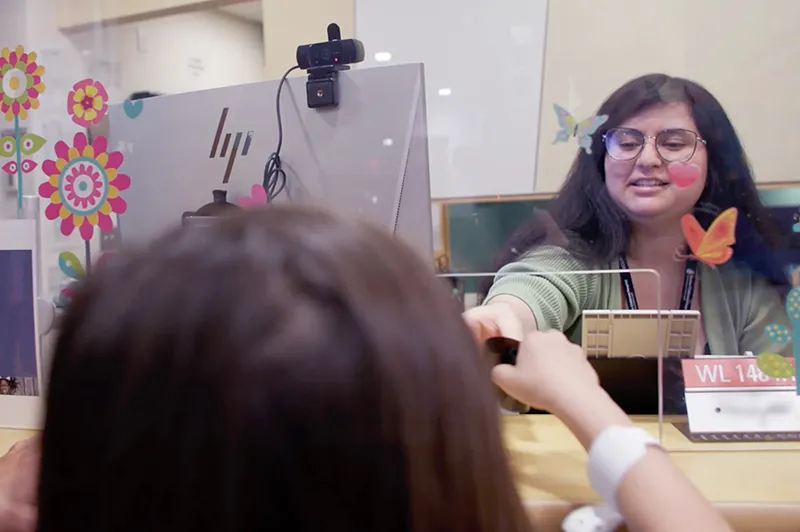
When you enter our office, you’ll check in at the front desk so that everybody knows you are here. You’ll also put on a special bracelet — only you will get to wear it.
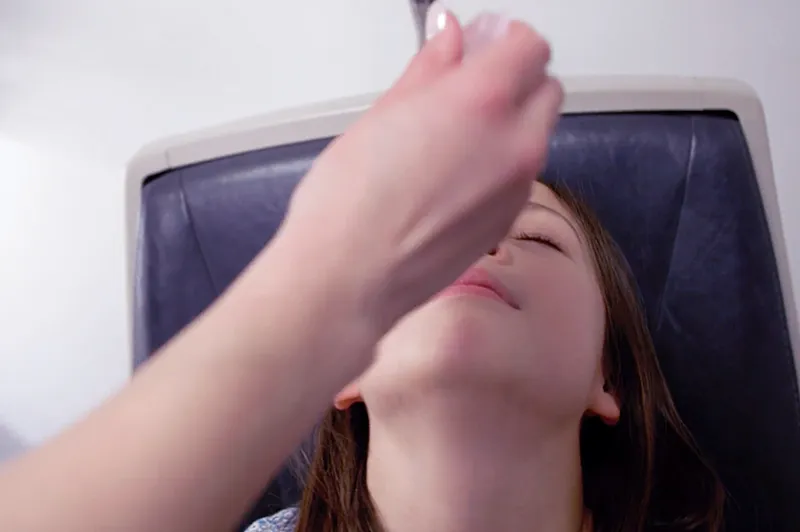
We’ll take you to a room to give you two to four eye drops in each eye. These make your pupils bigger and allow us to get the best possible view of your eyes’ health.
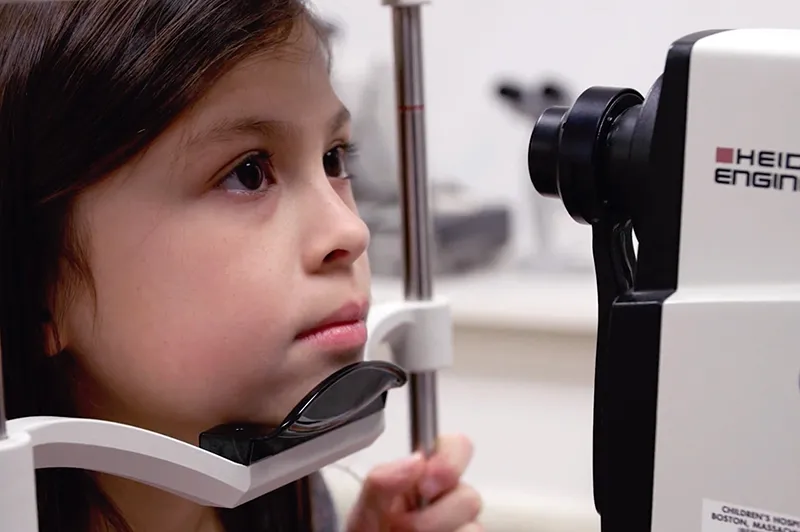
Next, you’ll go to a room and meet your eye doctor, who will have you look through a variety of machines and lenses to examine your eyes’ health and determine your vision.
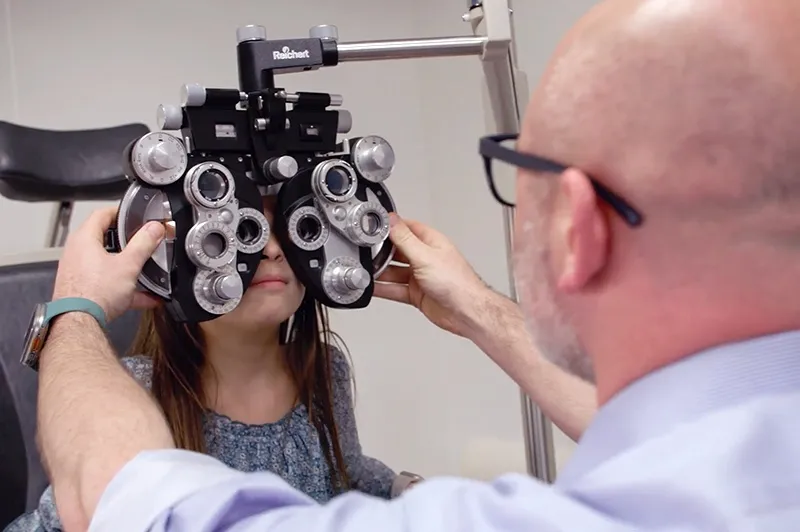
Next, you’ll go to a room and meet your eye doctor, who will have you look through a variety of machines and lenses to examine your eyes’ health and determine your vision.
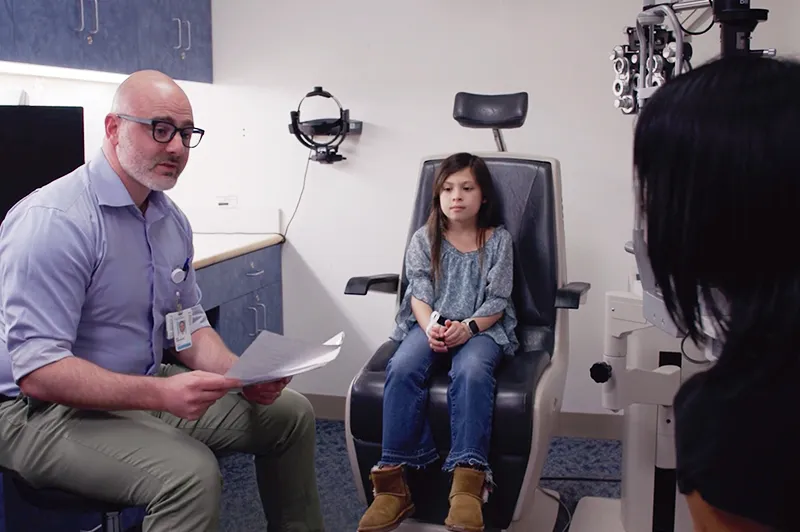
When testing is complete, we’ll let you know how your eyes are doing and, if needed, explain what we’ll next do to help you see better. You might get eyeglasses or some other treatment.
When you leave our office, it might seem bright outside. Don’t worry; we have sunglasses for you to wear. Your eyesight will eventually return to normal.
When you come for your eye exam, please bring the following with you:
The attending physician is the doctor who is responsible for your care. Other staff members may assist the attending physician for parts of the exam.
A pediatric ophthalmologist is a medical doctor (MD) specially trained to care for children's eye conditions. An ophthalmologist can perform surgery.
An optometrist (OD) is an eye doctor who can prescribe glasses or contact lenses and may refer a patient to an ophthalmologist if additional medical care is needed (i.e. surgery).
A technician is trained to perform vision testing and other parts of the eye exam.
An orthoptist is specially trained to evaluate eye muscle disorders and may measure the eye alignment with prisms or prescribe exercises.
A resident is a medical doctor who will become an ophthalmologist.
A fellow is fully trained as an ophthalmologist but is spending extra time training in the subspecialty of pediatric ophthalmology.
We also have observers (students and doctors) who travel here from around the world to see how we care for patients at Boston Children's. Observers do not perform any part of the examination.
Imagine trying to look into a room through a peephole. It's not so easy. Now open the door. Much better! The eye drops "open the door" to allow the doctor to shine light in the eye and see what is inside without the pupil getting small.
This has a side effect of making it hard to focus — especially up close — for two to six hours (depending on the type of drop and the patient's sensitivity). Kids can go back to school afterward, but they may have trouble reading or doing homework for several hours. Adult may or may not be able to drive home. It depends on how severely the vision is blurred by the drops. If you are not sure, plan to have someone pick you up.
At least two drops are usually given in each eye. The first is a numbing drop that may sting slightly for 5 to 10 seconds. Then the dilating drop or drops are given. These don't sting at all thanks to the first drop.
Even though the drops don't really hurt, many children just don't like the idea of getting them and may require gentle restraint for a few seconds while we administer the drops. In some cases, we can use a spray instead of a drop, but the spray stings a little more than the drops.
Registration can take 15 minutes. The history and initial evaluation takes about 15 minutes depending on the complexity of the history and cooperation of the patient. Expect to wait about 30 minutes for the drops to work before you will called back to the exam room. The final part of the examination and discussion takes another 15 minutes depending on how many questions you might have. Altogether this is an absolute minimum of one hour for a new patient, but if there are any delays, complexities, or special tests, you might plan to be here for two or even three hours for a first visit.
We make every effort to stay on schedule, but try as we might, there are often days when we fall behind schedule due to emergencies or unexpectedly complex eye problems. We are a worldwide referral center and so we try to build time into the schedule for complex patients but it is very difficult to predict accurately. You should be notified when you check in if there is a delay.
Also, if you find that you have been waiting more than 15 minutes after check-in and you have not yet been called please check with a member of our front desk team for an update.
After the dilating drops are given, the doctor shines a light in the eye and looks at the focus of the light that has been reflected through the eye. The doctor then places different lenses in front of the eye until the focus looks right. Once the proper lens power is determined, the doctor decides whether the patient needs help keeping things in focus — if so, glasses will be prescribed.
As you will see, we have lots of tricks. Sometimes we just check to see how well the child tracks a toy. Sometimes we use cards that have stripes on one side and watch to see which way the baby looks. We may also have the child play matching games. Our professional staff tailors the exam for the interest, ability, and age of the patient.