Popular Search Terms
Anesthesia Surgery Clinical Research Fellowships
Cardiac Anesthesia
Please see Cardiac Anesthesia Services to learn more about information about fellowships in Cardiac Anesthesia.
Contact information
Cardiac Anesthesia Fellowship
James Di Nardo, MD
Co-Director, Cardiac Anesthesia Service, Pavilion 341
E-mail: James Di Nardo
To request an application or information about a fellowship in the Department of Anesthesia, please complete our online form or print our application form using Acrobat Reader from Adobe, fill out the information as indicated, and return it to us at:
Department of Anesthesia
Boston Children's Hospital
300 Longwood Avenue
Boston, MA 02115
Thoracic surgery
Subspecialty: Pediatric Cardiac Surgery
The Cardiovascular Surgery Fellowship Program at Boston Children's Hospital has been in existence since 1972. Over the years, it has served more than 50 fellows who have completed either the six- or 12-month fellowship training program.
Prerequisite criteria
The pre-requisite criteria for selection are individuals who have completed their training in Cardio-Thoracic Surgery and wish to subspecialize in pediatric cardiac surgery. Typically, fellows have had some exposure, albeit limited, to surgery for congenital heart defects.
Goals of the program
The goals of the program are to provide an introduction to all forms of congenital heart defects, and to provide a graded progression of responsibility in the intraoperative and postoperative management of patients with congenital heart defects. The details of the training program depend on whether the candidate chooses the six- or 12-month program.
Faculty
The Department of Cardiac Surgery includes three full-time board certified cardiac surgeons, all of whom have extensive experience in congenital cardiac surgery, including congenital heart surgery procedures in adults. Faculty members include Pedro J. del Nido, MD, John E. Mayer, Jr., MD, and Frank Pigula, MD. Additional instruction will be provided by Amy Juraszek, MD, from the Department of Cardiology and Cardiac Pathology, and faculty members of the Cardiac Intensive Care Unit under the direction of Peter Laussen, MD.
Evaluation
At the end of either the six-month or 12-month fellowship program, the trainees receive an evaluation from each of the staff surgeons in the Department. Their evaluations are discussed with the trainee. For individuals in the 12-month program, an interim review is done after the first six months.
Six-Month Program
This is a six-month fellowship designed for surgeons who anticipate that they will predominantly undertake surgery for acquired heart disease, but in addition will undertake simple congenital cardiac procedures for older children and adults. Trainees will receive instruction in the following areas:
- Nomenclature and Pathology for Congenital Cardiac Disease: Trainees will receive weekly instruction for two hours in the study of congenital cardiac pathology. This course is supervised by Amy Juraszek, MD, who has specialized in congenital cardiac pathology and has access to over 3,000 specimens found in the Cardiac Pathology Registry at Boston Children's Hospital. The trainees have the opportunity to study specimens from the cardiac pathology registry, which covers the entire spectrum of congenital heart disease. The program is set to cover all of the major classifications of defects over the six-month period.
- Peri-operative Management of Congenital Cardiac Disease: Trainees spend one night in four on call in the 24-bed Cardiac Intensive Care Unit. They are also out of the operating room for approximately one full day in five. During this time, they receive instruction from the Cardiac Intensive Care specialist regarding indications and timing of surgery for cardiac disease, as well as peri-operative stabilization and management of patients. Further training, decision-making and management occurs at the cardiosurgical combined conference, which is held Monday afternoons from 4-6 p.m.
- Didactic Teaching in Surgery for Congenital Heart Disease: Trainees attend one-and-a-half hour teaching sessions on Wednesday mornings from 7-8:30 a.m., conducted by the attending staff in the Department of Cardiac Surgery. In addition, trainees participate in the didactic teaching sessions from 8-9 a.m. on Saturdays, covering the full range of topics in congenital heart surgery over the six-month time period.
- Graduated Operating Room Experience: In the six-month introductory fellowship training program, trainees have the opportunity to undertake a number of surgical procedures as the operating surgeon while directly supervised by an attending staff surgeon. The operative experience is gained in a progressive fashion, with procedures such as coarctation repair, modified Blalock shunt, ductus ligation and division of vascular ring. Open-heart procedures on cardiopulmonary bypass also are performed, including atrial septal defects (secundum and primum), ventricular septal defects and bi-directional Glenn.
Twelve-Month Program
This program is aimed at individuals who expect to practice primarily pediatric cardiac surgery, and therefore require an extended period of training and increased surgical responsibility.
In addition to Pathology Conferences, Peri-operative Management experience and didactic teaching sessions available through the six-month fellowship, fellows in the 12-month program will have graduated operating room experience.
Trainees will have the opportunity to work as the operating surgeon, assisted by an attending surgeon in procedures that are much more complex and involve neonates. The goal will be to provide the trainees with sufficient experience to perform most congenital heart procedures as an independent surgeon.
Examples of the type of procedures fellows are expected to perform include an arterial switch procedure, repair of truncus arteriosus, repair of interrupted aortic arch, Norwood procedure for hypoplastic left heart syndrome and Fontan operation.
Clinical & Research
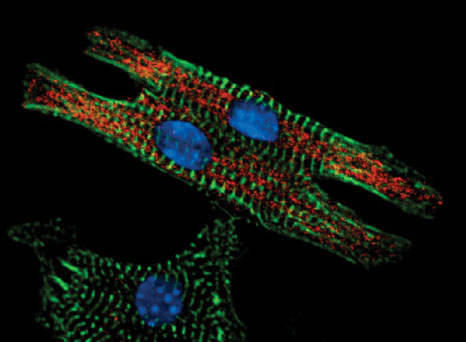 Experience in cardiovascular research is an essential component of fellowship training in cardiology. In addition to patient-care responsibilities, fellows are expected to become involved in a clinical research project during the first year, under the guidance of a faculty member. Such projects, either new or ongoing, are often of the chart review type, and may form the basis for a future prospective study for those fellows interested in clinical research.
Fellows should identify a clinical or basic science research mentor from among the faculty by the end of the first year. Three months of the second year, and virtually all of the third year, are dedicated to ongoing research training.
During the first half of the second year, it is expected that each fellow will, with appropriate guidance, write and submit a proposal for a research project which:
- addresses an important question
- applies available state-of-the-art techniques to answering that question
- is practical within the time and other constraints of the fellowship
The project may be either basic science or clinical; clinical research will in all probability entail a prospective study. Fellowship training in the department beyond the second year is based on finding a suitable mentor and appropriate research project(s).
Grants
The Department has an institutional NIH training grant, which permits selected fellows to train in basic research laboratories throughout the Harvard Medical Area, as well as in clinical research. Fellows are encouraged to write individual grant applications, but fellowship funding does not depend on such grants being funded. Fellows interested in higher-level training in clinical research can take part in the Program in Clinical Effectiveness at the Harvard School of Public Health or the Scholars in Clinical Science Program at Harvard Medical School.