Popular Search Terms


About the Epilepsy Center
Our depth of experience in pediatric epilepsy
Since our founding in 1944 by William G. Lennox (known for his discovery of Lennox Gastaut syndrome, a severe form of epilepsy) as the world’s first comprehensive pediatric epilepsy center, we’ve been at the forefront of pediatric epilepsy research and care. Today, the Epilepsy Center at Boston Children’s Hospital is recognized by the National Association of Epilepsy Centers as one of only a few Level 4 pediatric epilepsy centers in the country. Level 4 epilepsy centers provide complex forms of intensive neurodiagnostic monitoring and more extensive medical, neuropsychological, and psychosocial treatment. Level 4 centers also offer a complete evaluation for epilepsy surgery and a broad range of surgical treatments.
We’re always looking for new ways to diagnose and treat epilepsy and seizures in children. See our research and innovation page to learn more about our work.
Why choose the Boston Children’s Epilepsy Center?
Everyone on our team, from our administrative staff and social workers to our nurses and doctors, is experienced in dealing with the unique needs of children with epilepsy and seizures.
We understand that epilepsy is a complex condition that can affect all aspects of a child's life and family. We’re also sensitive to the physical and emotional challenges seizures can cause. We take the time to speak with patients and families about epilepsy — from explaining how testing works to reviewing all available treatment options and answering questions.
May 29, 2025
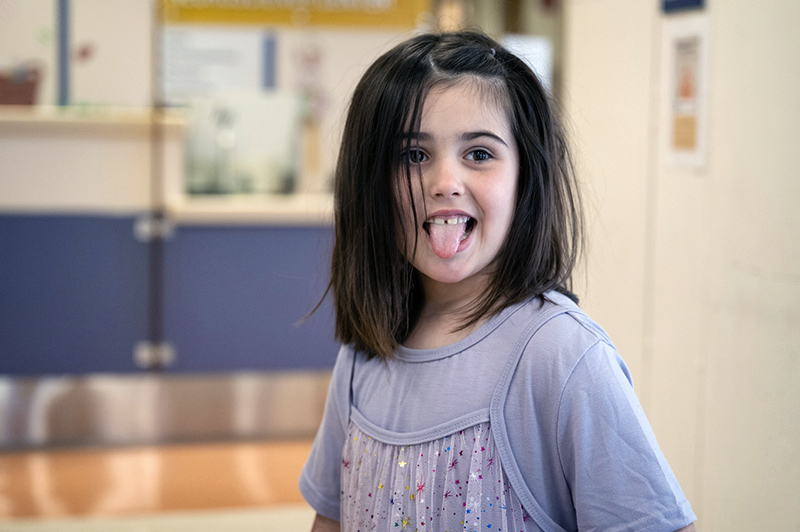
“Princess June” reigns supreme over Rasmussen syndrome
What do you call a “girly” 5-year-old who adores dolls and frilly nightgowns? If you’re one of June Pelletier’s nurses at Boston Children’s Hospital, the answer is “Princess June,” of course. …
January 27, 2025
Status epilepticus: What’s changed, what to know, and a global perspective
Status epilepticus, or a prolonged seizure lasting more than five minutes, is a rare complication of epilepsy and a medical emergency that can occur even in people without a diagnosis of epilepsy. If…

November 11, 2024
For Fiadh: Pushing the envelope to treat drug-resistant epilepsy
Fiadh is a bubbly and empathetic 4-year-old. And if you ask her parents, Elaine and Dario, she’s also mischievous and wild. “She knows when she shouldn’t be doing something,” Elaine says. “Then…
How we diagnose pediatric epilepsy
Because epilepsy isn’t diagnosed with just one test, we collect a lot of information about your child to assess the cause of their seizures, which could include an illness, injury, or problem with how their brain grew. Our team includes pediatric epilepsy specialists, including epileptologists, neurosurgeons, neuroradiologists, and others who specialize in diagnosing and treating epilepsy.
During your first visit to the Epilepsy Center, you’ll meet with a pediatric neurologist who will review your child’s medical history, perform a complete physical exam, and may order tests such as high-definition electroencephalogram (EEG) to get a more detailed picture of brain activity. Our EEG technologists specialize in working with children, and our clinicians are experts in interpreting the results. This expertise can make a big difference in making a correct diagnosis.
We may also order tests such as high-resolution (including 7T) MRI, magnetoencephalography (MEG), PET, subtraction SPECT, transcranial magnetic stimulation (TMS), or a sleep study.
Our Epilepsy Genetics Program checks for genetic concerns, provides advice, and talks with you and your child about the best approaches for care.
How we care for pediatric epilepsy
We offer a wide range of treatments to manage epilepsy and seizures in children and young adults. We collaborate with you and your family to decide the approach that works best for them.
Innovative treatment options
Although medication is generally the first line of treatment for epilepsy, we also use recent research to further individualize treatment to help control seizures.
Some innovative treatments we offer include:
- Chronotherapy: This involves carefully timing treatment to the times when seizures most often happen. Tobias Loddenkemper, MD, a neurologist with the Epilepsy Center, finds chronotherapy often helps medications work better to treat seizures.
- Genetically tailored treatments: The Boston Children’s Epilepsy Genetics Program uses DNA sequencing to discover previously unknown genetic causes of seizures. Some of these disrupt brain biochemistry in a way that can be targeted with drugs.
- Pharmacogenomics: We’re studying how genetic differences in metabolism affect children’s responses to medications. This information helps us choose the optimal treatment for each child.
- Ketogenic diet: Our Ketogenic Diet Clinic is run by nutritionists who specialize in this diet and are supported by a dedicated team of nurses and social workers. We can provide detailed counseling and a selection of recipes individualized for your child.
- Nerve stimulation (neuromodulation): This involves implanting a small pacemaker-like device in the brain to reduce seizures, including deep brain stimulation (DBS), responsive neurostimulation (RNS), and vagus nerve stimulation (VNS).
Surgical evaluations
Our comprehensive epilepsy surgery program offers a variety of options for managing medication-resistant epilepsy. These include intracranial monitoring, cortical stimulation and mapping, and a range of surgical procedures.