Recall Alert
There are recalls of ibuprofen and eye drops. Learn more >>
There are recalls of ibuprofen and eye drops. Learn more >>


Erythromelalgia (ur-i-thruh-muh-lal-jah) is a rare chronic pain disorder that can cause severe burning, redness, and pain in the extremities, especially the hands and feet. It can affect people of all ages, but often begins in childhood. There are two main types of erythromelalgia in children and adults:
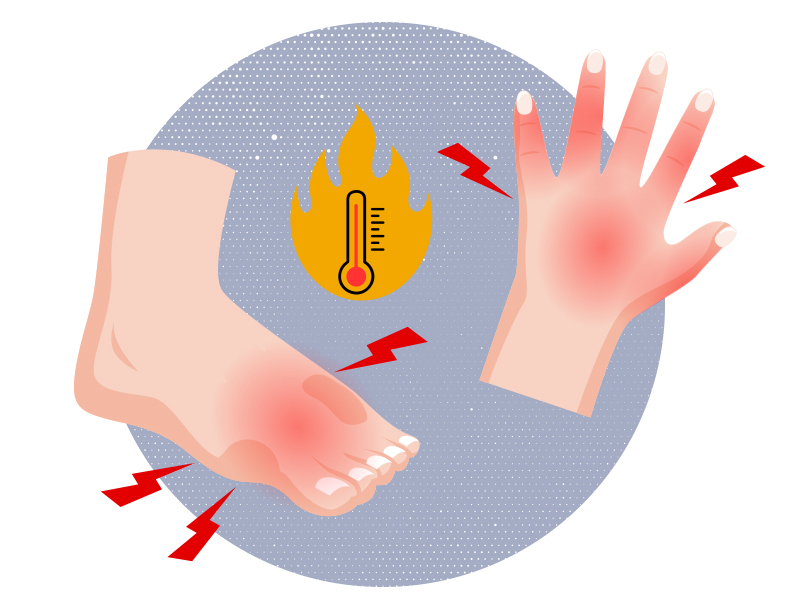
Erythromelalgia typically affects the hands and feet, but it can also sometimes occur in other parts of the body, such as the ears or face. It usually affects both sides of the body. Erythromelalgia in children has the same main symptoms as it does in adults. These include:
The pain caused by erythromelalgia usually worsens with heat and improves with cold.
Erythromelalgia may also cause:
Symptoms of erythromelalgia may come and go in episodes called flares. These may worsen over time.
Erythromelalgia is sometimes caused by a genetic variant and passed down through families. It can also occur along with another underlying condition. However, most cases of erythromelalgia have no known cause. Boston Children’s is conducting research to learn more about the condition, including developing a patient registry, performing research-based gene sequencing, and studying neurobiologic mechanisms.
Although they don’t cause erythromelalgia, certain things can trigger a flare for some people. These include:
If your child’s doctor suspects they might have erythromelalgia, they will perform a physical exam and ask about your child’s medical history. They may also recommend tests to confirm a diagnosis and rule out or rule in other conditions. These can include:
Because erythromelalgia has symptoms that are similar to those of other conditions (such as Raynaud’s phenomenon, peripheral neuropathy, and complex regional pain syndrome) — and because symptoms can come and go — it’s important to see a doctor who has experience diagnosing and treating children with erythromelalgia.
Treatment for erythromelalgia is aimed at helping relieve symptoms. Your child’s doctor will discuss different treatment options, which may include:
At Boston Children’s, we see children and teens with erythromelalgia in our Pain Treatment Center. We take a state-of-the-art team approach to pain management that encourages children and families as active players in their own care. Our patients receive care from anesthesiologists, neurologists, and pediatricians, in addition to evaluation by a psychologist — who specializes in pain management through cognitive behavioral therapy — and a physical therapist. Our team also conducts research on erythromelalgia, with the goal of learning more about its causes and potential treatments. To learn more about research, please contact our team at ped-emerge@childrens.harvard.edu.
